Issachar People Logo


Women, Men and Authority


What Genesis, Jesus and Paul really teach on gender and leadership
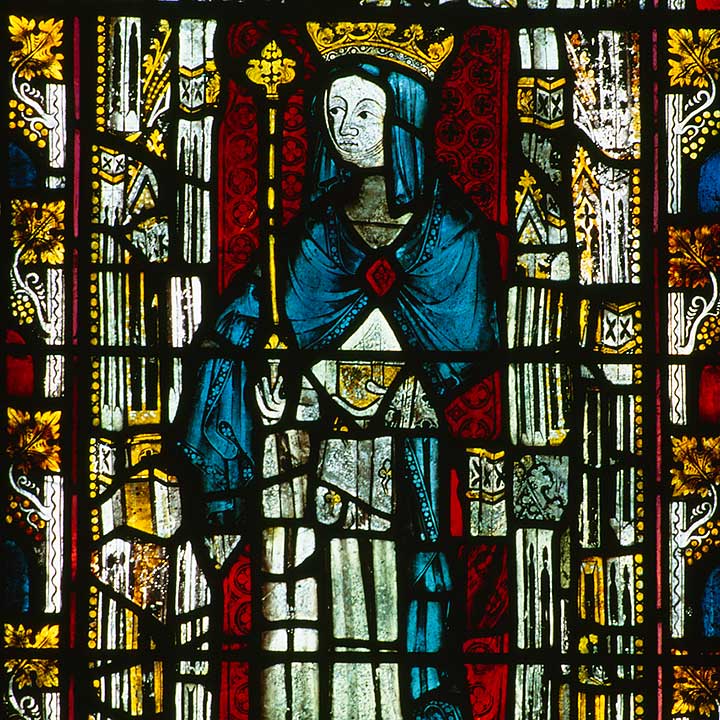
St Hild, image from Christ Church, OxfordIn many sections of the Church, there continues to be significantly more women than men in congregations, although, if reports are to be believed, Gen Z males (18-24) are upending years of this pattern, attending church in greater numbers than their female counterparts.

Organisations like Christian Vision for Men have spent years working to equip men to support each other in faith and reach out and share the gospel in ways that engage them.

There is a real need for this kind of outreach, as Rev Campbell Campbell-Jack argues in his article last week, because, as he makes clear, churches often appeal more to women than men, with many focusing more on emotional expression and healing than strength, authority and courage. I would add that when the main social time at the close of the service consists purely of chats over tea and coffee, this also, in general, is going to have greater appeal to women than men. 

Male/female stereotype

It is obvious that women and men are biologically very different, and this is generally true in regard to emotional traits, but not universally. There is a significant overlap and variation within each group.

Many people fit naturally into the male/female stereotype. Women, in general, make better caregivers, making them the natural choice to care for young children at home.

They also tend to be more intuitive in their emotional understanding of others. Men tend to prefer being active, and, being significantly stronger physically, are often at their best in a protective role, also relishing challenge in life. 

However, many people simply do not fit into this typical pattern – in some couples, for example, the woman turns out to be the more able provider, and the man proves to be the better caregiver for the children.

I would say that true complementarity involves both men and women in leadership. This, I believe to be especially true in the Church, as part of God’s original design.

Because one size doesn’t fit all, I don’t think that only men are called to lead – nor that women should only lead if men don’t step up to the mark. I would say that true complementarity involves both men and women in leadership. This, I believe to be especially true in the Church, as part of God’s original design.

Transformational gospel

I have spent some time grappling with this over the years. I was brought up in a church and family that honoured women, but which viewed men and women in different roles, with eldership and teaching reserved for men – what is known as the complementarian approach. Having felt called to train as a Methodist Local Preacher, I really wanted to get to grips with what was potentially a stumbling block in this sense. And I really wanted my conclusion to be based almost entirely on Scripture, not on secular arguments. 

To help me grapple with the Scripture, I sat down with an open mind to read two books (both by women, incidentally), presenting opposing views, which had both been recently released. I started with the one on complementarianism. I really struggled to finish it. It didn’t dig deeply into Scripture and didn’t speak in a way that I could tally either with my experience or my understanding of womanhood, even if I was a mostly stay-at-home mum at the time. 

The book by Katia Adams, Equal, What the Bible says about Women, Men, and Authority, however, not only helped me come to an understanding on this subject, but also altered my view of the gospel in a profound way, helping me to understand how totally transformational the good news of Jesus was in society, especially in regard to gender. Quite a few of the following points come from Adams’ book (which I would recommend for a clearer understanding1).

Adam and Eve

Essentially, the gospel message brought back the true equality that was intended by God at the very beginning. Consider Genesis 1. This chapter gives us the overarching pattern of creation, before homing in on how Adam and Eve were created. Verses 27 and 28 say: 

So God created mankind in his own image, in the image of God he created them; male and female he created them. God blessed them and said to them, ‘Be fruitful and increase in number; fill the earth and subdue it. Rule over the fish in the sea and the birds in the sky and over every living creature that moves on the ground.’”

Note that God blessed them both, and said to both “… fill the earth and subdue it. Rule over …. every living creature…”. Both were given the mandate to rule, not just Adam.

The gospel message brought back the true equality that was intended by God at the very beginning.

The picture drawn in Genesis 2 is how Adam was formed first – crucially it was only he who was given the direction to not eat from the tree of the knowledge of good and evil. God allowed Adam to see how he needed someone else, then formed Eve as ‘helper’. It seems to me entirely mistaken to think of ‘helper’ as being in any way a subordinate role. Jesus used a similar word to describe Holy Spirit – who is our helper. In all cases in the Old Testament, the word ‘ezer’, used in Genesis of Eve, is of an equal (an ally, for example) or even as a superior – God being Israel’s ‘ezer’, or protector (e.g., Psalm 33:20). 

Man on his own was described as ‘not good’ (Genesis 2:18) – but together with his ally, his help, his partner, they, and all creation, were described as ‘very good’ (Genesis 1:31).  

Of course, this all went wrong with the Fall, when sin was introduced – and we see the change in relationship between man and woman. “… Your desire will be for your husband, and he will rule over you.

The teaching of Jesus

Jesus came to reverse all of the effects of the Fall. First and foremost, he paid the price for our sin – restoring our relationship with the Father. He promised Holy Spirit as our ‘helper’. But, He also began the process of restoring equality between rich and poor, slave and free, between different ethnicities, and, crucially for this topic, between men and women. 

He also began the process of restoring equality between rich and poor, slave and free, between different ethnicities, and, crucially for this topic, between men and women. 

Only men were chosen as the first Twelve – this was to reflect the Twelve tribes of Israel. But He chose His women followers as the first witnesses to His resurrection – Mary Magdalene ran to tell the other disciples of the disappearance of Jesus’ body; He later first appeared to her. Being the first witness to the resurrection, Mary has been called by some ‘the apostle to the apostles’. 

Throughout His ministry, Jesus engaged with women in a way unthinkable at the time. John 12:1-8 shows how He allowed a woman to anoint Him – not only an act of beautiful worship, but a priestly act, ministering to Him. In John’s gospel, the first time Jesus claimed to be the Messiah was to a Samaritan woman, who proceeded to be the first recorded evangelist. Jesus not only allowed, but encouraged Mary to sit at His feet – a position adopted by disciples to their rabbi – despite opposition. Essentially, Jesus treated women as equal to men – healing, empowering and challenging them, just as He did men. 

Early Church testimony

Women in those days had much less education than men, and as such, had significant disadvantages; despite this, in the early Church, there existed women of significant prominence and leadership. Paul commends many of these in his letters, such as Phoebe, a deacon (Rom 16:1); Priscilla, a leader alongside her husband Aquila, who also shared in teaching Apollos; Junia, to whom he refers as “prominent among the apostles” (Rom 16:7), and therefore arguably an apostle; and co-workers such as Euodia and Syntyche (Phil 4:2-3).  

We can also learn from history how both men and women were persecuted in the times of Nero, Diocletian and others. It was the church leaders in particular – men and women alike – who bore the brunt of the brutal executions.  There are a good number of references to female elders (presbyters) in the first centuries of Christianity, and the hugely successful Celtic Church in Anglo-Saxon Britain (5th-11th centuries AD) had prominent women leaders; St Hild being the most well-known, who was abbess of the monastery at Whitby – an abbey for both men and women.

The hugely successful Celtic Church in Anglo-Saxon Britain (5th-11th centuries AD) had prominent women leaders; St Hild being the most well-known, who was abbess of the monastery at Whitby – an abbey for both men and women.

Some of the most prominent and most important revivals and movements in UK history empowered women to preach and hold all offices in the church: the Salvation Army under William and Catherine Booth; Smith Wigglesworth supported women in ministry; and John Wesley became convinced of it by Mary Bosanquet Fletcher, and allowed women to preach – something that changed in various Methodist denominations after his death. 

Paul’s letters: 1 Cor 14

The complementarian position – having only men as leaders in the Church – is often based on a few well-known passages in Paul’s letters, despite these passages seeming to contradict Paul’s teachings elsewhere. Why, for example, should Paul tell women to be silent, yet include both men and women in the instructions to prophesy in the very same chapter (1 Corinthians 14)? 

In this case, it may well have been that a group of women were being particularly disruptive, as it is clear that the whole passage is about orderly worship. Also possible is that Paul was quoting someone else in verses 34-35, and then directly contradicting it after, as he seems genuinely quite indignant after these verses. He also refers to ‘the law’, without saying what part of the law he is referring to, something that he does not do elsewhere, which suggests that these are not his own thoughts. “They are not allowed to speak, but must be in submission, as the law says” (v34). There is nowhere obvious in the Torah to which he could be clearly referring. 

Paul’s letters: 1 Timothy 2

1 Timothy 2 is a chapter frequently quoted in this context, in particular verses 11-12: “A woman should learn in quietness and full submission. I do not permit a woman to teach or to assume authority over a man; she must be quiet”.  The context of this verse is particularly helpful in interpreting it. We see that the part before is all about living peaceably – men to lift up holy hands without anger or disputing” (v8). Prayers are to be offered so that we can live peaceful and quiet lives (v1-2). 

Then Paul encourages women to learn – in itself something that went against common culture, as women in general weren’t taught in other contexts. They were to learn in quietness and submission (surely the best way for all to learn!); this suggests that some women were being argumentative. Paul then goes on to point out that it was because Eve hadn’t been properly taught by Adam that she was deceived in the first place – hence women needed to be given equal teaching.

A significant question arises as to why Paul uses the word ‘authentein’,  here translated as 'authority', which is used nowhere else in scripture. Grammatically, Paul’s statement, “I do not permit a woman to teach or assume authority”, is actually, “I am not permitting…”, which suggests that this may have been a temporary ban for a specific time or place – because of issues Timothy was facing in his church – rather than an instruction for all time.  One of those issues may have indeed been to do with gender roles, as the worship of the great mother goddess Artemis in Ephesus subverted the dynamic between men and women in that place. 

If understood this way, it would mean that Paul was correcting a heresy, as he often did in his letters, not giving an utterly illogical reason why women may not lead or teach men. 

One popular heresy was that Eve was created first, and she breathed life into Adam’s lifeless body. She also brought him enlightenment by giving him the forbidden fruit. Therefore, a very plausible explanation of this passage is that, unsurprisingly, some women were keen to promote this idea, so they needed to submit to correction, and learn the truth. ‘Authentein’ has the connotation of originating or initiating something – compare our word ‘authentic’ – and the preposition is not ‘over’ (a man), it is ‘of.’

Therefore, what Paul appears to be saying is “I do not permit a woman to teach that she is the originator (or source) of man. She is to be silent [on this issue, because it isn’t true] – for Adam was formed first!” And the woman was deceived, not the man. If understood this way, it would mean that Paul was correcting a heresy, as he often did in his letters, not giving an utterly illogical reason why women may not lead or teach men. 

Paul’s letters: 1 Corinthians 11

Other statements of Paul appear at first sight to be contradictory. In 1 Corinthians 11, the main discussion is on head coverings, but it is used to also assert the subordination of women. We have a whole section where it seems that man is the head of woman (and Christ the head of man), then a discussion on head coverings, followed by an assertion that “man did not come from woman, but woman from man; neither was man created for woman, but woman for man.”

Then we get what appears to be the opposite, “Nevertheless, in the Lord, woman is not independent of man, nor is man independent of woman. For as woman came from man, so also man is born of woman. But everything comes from God.” (v11-12).

Is Paul really contradicting himself? It seems much more likely that, as he does elsewhere, Paul sets out an argument that he has heard, whether a local quote, or assertions certain people in the church are making, then proceeds to show how it makes no sense. He then, crucially, states, “Nevertheless, in the Lord…” and says what the real answer is – in the Lord, neither man nor women are independent of each other, both come from each other, and, most importantly, both come from the Lord. This tallies with Paul’s world-transforming statement in Galatians 3:28: “ There is neither Jew nor Gentile, neither slave nor free, nor is there male and female, for you are all one in Christ Jesus.”

Summing up

There is much more that could be said on this topic, this is only a quick overview. But essentially, what I am arguing is that authority was given by Jesus to men and women on an equal basis. Since the Church’s early days, we have misinterpreted Paul’s teachings, and, tragically, by imposing a hierarchical understanding of authority, have reverted to the post-Fall position of men dominating women. 

The two genders are indeed different, but then, each woman is different from every other woman,  and each man is different from every other man, because we are all unique.

The Church will flourish best if we allow God to use each one of us in the way He wishes to.

What is needed in the Church is strong leadership by both men and women, in a way that utilises the skills and abilities of each individual, and according to God's calling. The Church will flourish best if we allow God to use each one of us in the way He wishes to: “Each of you should use whatever gift you have received to serve others, as faithful stewards of God’s grace in its various forms.” (1 Pet 4:10). 

We all have failings and weaknesses, whether related to our gender in general, or entirely unrelated. And we all, men and women, work best, whether in the Church or in marriage, or even at work or in friendship, when we make efforts to help each other to shine in the areas of our giftings, and give support in those areas where another may struggle. “Carry each other’s burdens, and in this way you will fulfil the law of Christ.” Gal 6:2. 

Notes
1. Another highly recommended book on this topic is ‘Why not Women?’, by Loren Cunningham and David Joel Hamilton

Kathryn Price, 21/11/2025
Feedback:
(page   1   2)
Jenny Yates 22/11/2025 10:45
First, well done, Kathryn, for sharing your personal journey; giving some historical examples of women in Church leadership, and looking at some relevant Scriptures.

Now, my response to 'Guest' 21/11/25 13.39: What you describe is the Old Covenant, institutional, hierarchical, sacerdotal model of leading God's people, which is now obsolete. The New Covenant model of Church is radically different! Yes, the High Priest is male - he's our permanent Great High Priest, the Lord Jesus (Heb.4:14-5:6). All others are redundant; we now have the priesthood of all believers. Christ is also the (only!) Head of the Church, and every believer is a member of his body, each dependent on him and one another. (1 Cor.12)

While I share Rev. Campbell-Jack's concern (see last week's P.T.) that some sections of the Church (or so-called 'Church') are becoming over-feminised, the solution is not fewer women in leadership, but more Bible-believing, spiritually mature men! A serious handicap is our way of 'doing Church.' The New Testament model is not to have one trained, professional vicar/minister/pastor, whether male or female, brought in from elsewhere to lead the Church; it is team leadership - a group of equal-status elders/overseers comprised of both men and women, usually appointed from within the local fellowship.

It's significant that in countries where the Church is growing rapidly, such as China and Iran, the growth is happening mainly through informal groups of believers meeting in homes. When a group becomes too large to meet in one house, it splits into two, as with healthy living cells, and many of these groups are led by women! There is no hierarchical structure. Like the early Church, they don't waste money and effort raising funds for special buildings, ornate robes and fancy communion vessels! True, there is a risk of heresies creeping in, but isn't even that better than dead, woke religiosity?

Kathryn acknowledges that she has been able to do no more than introduce some relevant Scriptures on this subject. I have written a more in-depth article on it, if the editors are agreeable to publishing it.
Douglas (Guest) 22/11/2025 11:45
David Pawson’s book “Leadership is male” starts by saying the church is basically following the world on this issue, which can’t be a good thing. It’s hard to believe God would cause one position to be recorded in Scripture and then expect His people to move to quite a different position over time, which is where we are today.
Jenny Yates 22/11/2025 16:00
I have learned a great deal from David Pawson, for which I'm grateful, but I cannot agree with him that leadership is exclusively male, and I base my arguments on Scripture. Yes, at present, the Church is following the world on several issues, which is wrong but that is nothing new. It may have begun a little earlier, but the rot really set in when Christianity was adopted as the official religion of the Roman Empire, in the 4th century. Thousands of people lined up to be baptised, without having understood the Gospel; repenting of their sins, or renouncing their pagan practices. They brought the world into the Church by, for example, continuing to worship their pagan deities, but dressed up as 'saints,' with the goddesses, of course, becoming 'the Blessed Virgin Mary.'

Instead of the New Testament and early post-N.T. way of operating, the Church also began to adopt pagan and O.T. models of leadership - hierarchical structures, all controlled by men. A N.T. bishop/overseer (male or female) was a member of a local church leadership team, not someone who supervised many churches over a wide geographical area. And the Bible knows nothing of archbishops, archdeacons, rural deans, vicars, rectors, canons, cardinals or popes, nor of the title 'Reverend.' (Used only once in the Bible - of God himself! Psalm 111:9, KJV)

Instead of Communion being a shared agape meal, in a home, with everyone participating, it became a religious ritual performed in special buildings by professional, robed clergy - in a language which increasingly fewer people understood - with the congregation merely providing an audience. For about 900 years, up to 1970, Catholics could not even receive the wine, only the bread! And since the ritual came to be seen as a re-enactment of the sacrifice of Christ, it had to be performed by a man, as under the Old Covenant.

It's high time we returned to the New Testament model, not only in terms of leadership, but the whole way of being the Church
Michael Petek 22/11/2025 22:13
'Guest' 21/11/25 13.39 is me.

Your comment, I'm afraid to say, Jenny, is inept. There is nothing "radically different" about New Covenant worship, and the reason is this. The Old Testament observances were types and shadows of the heavenly reality which Christ brought. A shadow is always similar to the reality that casts it, though it is different in other ways. The Old Testament laws of public divine worship apply by analogy to authorise New Testament worship. Each and everything that Christ instituted for public worship has a warrant in the Torah, and nothing he instituted lacks it.

Christ would never have established a public church (ekklesia) without a warrant in divine law. It is found at Leviticus 23:21: "On that same day [Pentecost/Shavuot] you are to proclaim a sacred assembly and do no regular work. This is to be a lasting ordinance for the generations to come, wherever you live."

For those who dislike hierarchy, the book of Acts is contrary. Isaiah 1:26 has a promise that God would restore Israel's judges as at the beginning. We see this as the Apostles are named in chapter 1 of Acts with a mention at 1:15 that the assembly had about 120 members. This was the quorum for a community that was to have its own court, and we see in chapter 15 the Apostles and the elders gathered to determine a point of law, something that only a public court could do. Then we read in chapter 16 that Paul and Timothy travelled from town to town, and delivered the decisions reached by the apostles and elders in Jerusalem for the people to obey.

We learn from the narrative of Nadab and Abihu that, in public worship, only what is prescribed is lawful. What is not is forbidden, and in biblical thought ritual crimes are dire. The laws of public worship are enabling laws, so called because they identify what is to be done, and by whom. What is to be done by the High Priest on the day when he is anointed is the daily grain offering referenced at Leviticus 6:20. Every priest had to do this on his first day in service, but the High Priest had to do it every day. In the Church is has always been called "eucharistia", in Hebrew "korban todah". This is the thank offering which belongs to the category of peace offerings which by Numbers 15:1-4 were to be accompanied by a grain offering and a libation, which are perpetuated in churches on the authority of Leviticus 6:20.

The Rabbinic commentary on Leviticus 4, Vayikra Rabbah 9:7 teaches: "In the Messianic era, all sacrificial offerings will cease — except the korban todah (thanksgiving offering)."

To be clear, Christ is the only ministerial priest who is in active ministry in his own Person. No other first-born sons of Israel are active as such, and the sons of Aaron are no longer substituted for them. But Jesus can act and does act through agents (sheluchim) just as the High Priests of old did, and these agents are ordained from among the baptised who share in the priesthood of all believers. All are priests, but not all are agents of the High Priest.

The Temple Institute has a feature on its website (A Day in the Holy Temple - Part 7) that demonstrates: "The eighth kohen, who is the twelfth in the lottery, merits to bring the Kohen Gadol's personal meal-offering up to the altar."

It gets worse when you discuss the course of the Church in the fourth century. Understand that the Roman Empire under Constantine by the Edict of Milan 313 merely removed the persecution that had been imposed by Diocletian, by which time Christianity had already become the state religion in Armenia, Ethiopia and Georgia only. It did not yet become the official religion of the Roman Empire. That occurred by the Edict of Thessalonica, issued on February 27, 380 AD by Roman Emperors Theodosius I, Gratian, and Valentinian II, and it made Nicene Christianity the official state religion of the Roman Empire.

During the intervening years the Emperors tried to hold both pagans and Christians together in some modus vivendi, though Julian the Apostate tried to take the Empire back into paganism. In the meantime the Church had to navigate the Arian crisis and was nearly overwhelmed by it, but orthodoxy triumphed through the heroic activity of Athanasius of Alexandria.

No, thousands of people did not line up to be baptised and were admitted to the Church without repentance, without understanding the Gospel, and worshipping their old gods now disguised as saints. The catechetical lectures of Cyril of Alexandria should disabuse you of that nonsense.

From the time of Theodosius the worship of pagan gods was criminally punishable. Codex Theodosianus 16.10.6 (issued 381) prescribed the death penalty for those performing sacrifices, especially in the context of divination (haruspicy, ritual inquiry of the gods). This was tied not only to religious suppression but also to wider Roman laws against maleficium (harmful magic) and treasonous divination. Practices such as consulting augurs or haruspices in secret, or using rituals for political prediction, could bring capital charges. These were considered threats to imperial security.

Let's now discuss the agape meal. It still is observed in Eastern Orthodox churches, namely the Coptic, Greek and Russian, and the St. Thomas Christians of India. These hold the agape at Easter, while the Ethiopian Church observes it every Saturday. The agape is not the same as communion.
Peter M (Guest) 23/11/2025 14:43
Jenny.

Spot on.

Apart form anything else, the institutional church, both Protestant and Roman Catholic is crumbling before our very eyes, and without the wider cultural acceptance necessary to keep propping it up.

I hope I live long enough to see (again) what you describe, although it may be necessary for us to prepare to become ‘outsiders’ again.

Jonathan Holbrook (Guest) 23/11/2025 15:12
I've always understood that men and women have equal status before the Lord but have different, God-given roles - as illustrated by the first man and woman, Adam and Eve.
Charles Gardner (Guest) 24/11/2025 10:13
Fantastically well said, Kathryn! A fresh blast of Scriptural sense to blow away the cobwebs of much unwarranted distraction on this issue.
Jenny Yates 24/11/2025 11:48
Well, Michael, my initial reaction to your latest offering was: "What a load of religious verbiage!" Most of what you say has little to do with the question under discussion, which is the place of female leaders in the Church! My main point was that Christianity being adopted as the official religion of the Roman Empire was the primary factor which led to it becoming building centred; professional clergy dominated, and ritual focussed, a model similar to pagan and Old Covenant worship, instead of the New Covenant pattern of Jesus centred, Holy Spirit led, whole body ministry. This resulted in the exclusion of women from leadership positions which they had shared with men for more than three centuries.

In criticising institutional, hierarchical structures, I didn’t mean to suggest there should be no trans-local governance of the Church at all. Supervision and guidance are clearly essential, to ensure correct doctrine and suppress heresy. However, there is no justification for having umpteen levels, from local ministers to archbishops and popes!

In Matthew 16:17-19, Jesus gave Peter the authority to “bind and loose” i.e. forbid and permit. The ‘you’ there is singular, but in Matthew 18:15-20, he extends that authority to the gathered church, even if that’s only two or three people. And he doesn’t specify that those people must be men! The gathered church can discern the will of God, with the aid of the Holy Spirit (John 14:15-26). This is the principle on which U.K. Baptist churches operate, at least in theory! The Baptist Union and senior regional ministers provide help and advice, but ultimately, all decisions are the responsibility of the local fellowship.

Rather than prescribing detailed structures for trans-local church governance, which may need to vary depending on circumstances, the New Testament stresses the importance of leaders having the right character and attitudes, (1 Tim.3:1-12; Titus 1:5-9). Jesus forbad fancy titles; he taught that leadership is about humble service (Mt.20:20-28; 23:8-11; Jn.13:1-17). When writing to Church elders, Peter describes himself as “a fellow-elder," not a senior elder or Apostle. He instructs the under-shepherds to care for the flock willingly; not for financial gain but to serve; not to lord it over them, but to set an example. (1 Pet.5:1-40)

I repeat, we need to get back to the New Testament model of being the Church.

Michael Petek 24/11/2025 13:56
If you have an objection to things building-centred, the church at Dura-Europos is the earliest archaeologically identified Christian house church, converted from a typical home between 233 and 256 AD. It is famous for containing some of the oldest known Christian paintings. The Aqaba church in Jordan is cited by some sources as the oldest known purpose-built Christian church, built between 293 and 303 AD. It predates other well-known ancient churches and was a basilical church, built specifically for Christian worship. 

Where do you think the term 'clergy' comes from? It comes from the Greek kléros (Englishman's Concordance 2819): lot, portion, inheritance, share. We find it in Acts 1:17 where it refers to a share in the Apostles' ministry. The whole point about pastors having a share in the Apostles' ministry is that they were to oversee a public congregation, namely the sacred assembly that by law must be convened on Pentecost. To do that, liturgical powers of the High Priest had to be communicated to them in accordance with enabling laws, and the law in play is the law of agency, by which Jesus made Apostles, and by which Jews in every age appoint agents for private or official purposes.

An agent can be appointed only by the principal in whose person he acts, or by an existing agent. Ordination by the laying on of hands is good for this purpose. If the reverse were the case, and the High Priestly powers committed to the Apostles cannot be transmitted onward, there is no possibility of public worship in accordance with divine law and no point in the continued existence of a public church.

Pagan cults in the Roman world were centred on the faultless performance of prescribed ritual, often by priestesses as well as priests. A Roman was obliged to participate in the Imperial cult when summoned, but otherwise he could worship any god he liked. If he took up the cult of a new deity he didn't have to abandon the others. But if he became a Christian, then he did. That is why paganism died out with the passage of time.

The Bible does not recognise the concept of 'pagan' worship as such. It identifies acts which are forbidden (eg. divination, sacrifice to a foreign god, mediumship), and it identifies public and sacred acts which are unlawfully done save by a person lawfully appointed and enabled. Within these limits, ritual is morally neutral and no objection can be taken to its use in Christian worship as long as it is not unbecoming and things are done decently and in order. If you want to examine the oldest Christian liturgy in continuous use, there is the Divine Liturgy of St. James, which dates to the fourth century.

It is a fundamental principle of biblical law, and for that matter of English and any other legal system, that, as a private person you may do anything you choose that the law does not forbid; but acts of a public official must have the warrant of positive law.

God alone has the prerogative of making primary legislation concerning the public worship of Himself. In the Torah, what is justly due to Him is due from the High Priest, and what the High Priest owes Him is the daily grain offering which he is is to make on the day when he is anointed, namely every day. The people of God owe to the High Priest and to God attendance at the appointed venue where the offering is made. Not singing. Not praying. Not reading from the Scriptures. Not preaching. Although it is well done to include these things in divine service, they are not of the essence of what is owed but are merely ancillary to it.

Biblical laws authorise univocally the Levitical sacrifices, but they apply by analogy to authorise Christian public worship in the Eucharist. The Eucharist is analogous both to the grain offering of the High Priest and to the grain offering which must be appended to a thank offering. Although Christian worship is different from Jewish Temple worship in some respects, it is similar in others. It is the similarity that puts Christian worship within the scope of the enabling laws.

I'm glad that you observe that Christ gave to Peter the authority to bind and loose (asar ve-hittir). The Jewish Encyclopedia has this

“The power of binding and loosing was always claimed by the Pharisees. Under Queen Alexandra, the Pharisees, says Josephus ("B J." i, 5, § 2), "became the administrators of all public affairs so as to be empowered to banish and readmit whom they pleased, as well as to loose and to bind." This does not mean that, as the learned men, they merely decided what, according to the Law, was forbidden or allowed, but that they possessed and exercised the power of tying or untying a thing by the spell of their divine authority, just as they could, by the power vested in them, pronounce and revoke an anathema upon a person. The various schools had the power "to bind and to loose"; that is, to forbid and to permit (?ag. 3b); and they could bind any day by declaring it a fast-day (Meg. Ta'an. xxii.; Ta'an. 12a; Yer. Ned. i. 36c, d). This power and authority, vested in the rabbinical body of each age or in the Sanhedrin (see Authority), received its ratification and final sanction from the celestial court of justice (Sifra, Emor, ix.; Mak. 23b).”
John Shipton (Guest) 28/11/2025 01:05
Cult members cannot say much about being born-again, filled with Holy Spirit, and have the assurance that their names are written in the Lambs Book of Life. It is similar with so many religious people that attend church services. It can be said that this too also applies to those at the front of church authority. There are many using titles on line to attract the unsuspected and are deceiving followers in what they do and practice. There are leaders who consider themselves to be prophets, apostles, bishops and so forth and tell us not to touch "the anointed ones" as they have been chosen by God. When simple questions are raised about this thus wanting simple answers, reactions to those questioning and which are persistent, is that "you are sent by the Devil" - a typical excuse! That is one reason that Almighty God is seen separating the sheep from the goats in the End Times. If you are a true shepherd of the flock and not hired leader, this is being revealed by Holy Spirit. For a "shepherd of the flock" is a dedicated and selfless leader who genuinely cares for and protects those they lead, willing to sacrifice for their well-being. A "hired leader," in contrast, is someone who is in it for personal gain, lacks a true commitment to the flock, and will abandon them during times of danger or difficulty. This distinction is often used in a spiritual context, contrasting the Jesus Christ, the "Good Shepherd," with a "hired hand" who prioritizes money over the people they serve. Praise the Lord!
(page   1   2)
Glenys
Hello and welcome to Issachar People, the re-imagining of Issachar Ministries, Prophecy Today and partner ministry New Beginnings Discipleship.
Contact us.

Welcome to our Website

Contact Us

If you would like to get in touch with us please use the details below.

Contact Details:
Phone: 0333 090 2187
Email:admin@issacharpeople.org

Office Address:
Issachar People
Bedford Heights
Brickhill Drive
Bedford
MK41 7PH


Contact Form
Please fill in this form and it will be sent to us. (*Mandatory Fields)

*Your Name:
Email Address:
Telephone: