The Weight of Our Souls
Ezekiel 18 and the Myth of Inherited Sin
 Among the prophetic writings of Scripture, few passages speak with the clarity and moral force of Ezekiel 18. In a generation tempted to explain righteousness and wickedness through the lens of ancestry, culture or history, Ezekiel delivers a word that levels us all before God: every person stands accountable for their own moral choices.
The exiles in Babylon had developed a saying to explain their suffering: “The fathers have eaten sour grapes, and the children’s teeth are set on edge” (cf. Ezek 18:2). In other words, we are suffering because of what our ancestors did. This proverb allowed evasion of responsibility, for if the present generation was merely the victim of their fathers’ mistakes, then repentance was unnecessary. They were sufferers, not sinners.
In a generation tempted to explain righteousness and wickedness through the lens of ancestry, culture or history, Ezekiel delivers a word that levels us all before God: every person stands accountable for their own moral choices.
But YHWH rejects this proverb outright:
“As I live, declares the Lord YHWH, this proverb shall no more be used by you in Israel.” (Ezek 18:3)
God’s response is not only a rebuke; it is a restoration of moral reality. Each person; parent, child, grandchild, is judged by their own deeds: “The soul who sins shall die.” (Ezek. 18:20)
No one bears another’s guilt. A righteous son is not condemned for a wicked father. A wicked son is not excused because his father was righteous. God judges each person, not by lineage, not by heritage, not by generational patterns, but by the posture of their own heart.
The Hebraic Emphasis: Responsibility as Covenant Identity
From a Hebraic standpoint, this emphasis on personal responsibility is not a New Testament novelty; it is woven throughout Torah and the Prophets. Deuteronomy affirms:
“Fathers shall not be put to death because of their children, nor shall children be put to death because of their fathers. Each one shall be put to death for his own sin.” (Deut 24:16)
While consequences of sin can ripple across generations (as all human actions do), guilt does not.
This is covenantal justice. Israel’s God does not traffic in generational blame. While consequences of sin can ripple across generations (as all human actions do), guilt does not. The moral agency of each person is upheld as a sacred trust. The God of Israel calls each name individually.
Thus, Ezekiel 18 is not theological innovation; it is prophetic restatement.
At first glance, Daniel 9 may seem to contradict this thesis: “We have sinned and done wrong… to us belongs open shame.” (Dan 9:5-8)
However, Daniel is not repenting for the sins of dead ancestors in the way modern institutions attempt to do. Instead, he is identifying himself with the present covenant breach of Israel and standing as a righteous intercessor among the guilty generation. He is not saying, “They sinned but I didn’t.” He is saying, “We as a people are currently under covenant violation, and I am part of this generation.” Daniel is personally righteous – though, of course, not sinless – yet he lives among a presently guilty nation. His confession is, therefore, intercessory, not symbolic; covenantal, not ideological; present-tense, not ancestral theatrics. This is entirely consistent with Ezekiel 18. I will explain this further in a future article.
Why Does This Matter Now?
The modern world is obsessed with collective identity, inherited shame, and generational blame. Individuals are taught to see themselves primarily as extensions of historical groups rather than as moral agents standing directly before God. This framework promises liberation but delivers only a new form of bondage, binding people to sins they did not commit while subtly excusing the sins they do.
The modern world is obsessed with collective identity, inherited shame, and generational blame.
Ezekiel 18 cuts directly through this confusion.
-
God does not ask us to carry our father’s guilt.
-
God does not bind us to our nation’s past.
-
God will not judge us for crimes committed before we were born.
But neither will He excuse our present rebellion simply because our ancestors were faithful. This is the weight, and the dignity, of the human soul.
Each and every person stands alone before God, not as a representative of the dead, but as a living moral agent created in His image. This is not modern individualism. It is ancient covenant justice. It is the God of Israel refusing to allow history, heritage or identity to replace repentance.
A Modern Temptation: Repenting for the Dead
In recent years, many Christians, and indeed many nations, institutions, and secular bodies, have adopted practices of issuing “repentance statements” for historical sins. Governments apologise for injustices committed long before the current generation was born. Universities confess the sins of founders long deceased. Denominations and Christian organisations repent for the actions of members from earlier centuries.
These acts often emerge from a sincere desire for reconciliation, yet they risk distorting the biblical nature of repentance and the Hebraic understanding of moral responsibility.
Biblical repentance, teshuvah, is a personal turning back to God. It belongs to the living, not the dead.
Biblical repentance, teshuvah, is a personal turning back to God. It belongs to the living, not the dead. It concerns one's own transgression, not the transgression of those over whom one had no agency.
When repentance becomes corporate confession for historical wrongs, several risks emerge:
A False Dichotomy of Repentance
Scripture knows nothing of repentance on behalf of those who cannot repent for themselves. The prophets never instructed Israel to repent for Abraham’s failings, nor the judges for the sins of the patriarchs, nor the apostles for the failings of earlier generations. Repentance always concerns the living heart before the living God.
When nations or institutions “repent” for the dead, they create two forms of repentance:
a. Actual repentance for personal or present sin
b. Symbolic repentance for historic or inherited sin
But symbolic repentance is not repentance at all. It has no biblical category and no covenantal function. It can gesture toward moral sensitivity while avoiding the true moral demand: examine yourself.
A Means of Claiming Moral Distance or Superiority
National or institutional repentance can become a public declaration of moral advancement: “We are not like them. We have evolved. We are enlightened.” This posture echoes the Pharisees’ self-justifying claim: “If we had lived in the days of our fathers, we would not have taken part with them…” (Matthew 23:30)
This is not humility. It is historical virtue signalling and self-congratulation.
The very act of condemning the sins of the past may become a platform for asserting contemporary virtue. It frames modern society as morally superior, its values more refined, its ethics more humane. This is not humility. It is historical virtue signalling and self-congratulation, using the failures of the dead as a backdrop for celebrating the morality of the living.
A Displacement of True Repentance
Nations and institutions often find it easier to confess the sins of centuries past than to confront the sins they are actively committing.
It is far simpler for a government to apologise for the wrongs of a previous regime than to examine its current injustices. It is easier for a university to denounce the prejudices of its founders than to address the moral compromises occurring in its lecture halls today. It is easier for churches to repent for ancestral failings than to face their present idols: self-indulgence, comfort, consumerism, tribalism, or apathy toward the poor.
The prophets never called Israel to repent for the sins of previous epochs. They called them to repent for the sins of their own generation: the injustices they were presently tolerating, the idols they presently bowed to.
A Confusion of Consequence With Guilt
Nations rightly acknowledge that they continue to experience the consequences of historical sin, broken trust, wounded relationships, lingering injustice. Yet consequence does not equal guilt. Ezekiel makes this distinction explicitly: “The son shall not suffer for the iniquity of the father, nor the father suffer for the iniquity of the son.” (Ezekiel 18:20)
Nations rightly acknowledge that they continue to experience the consequences of historical sin, broken trust, wounded relationships, lingering injustice.
Ezekiel rebukes the idea that ancestral sin determines moral standing: “If a wicked man fathers a son who sees all the sins that his father has done, he sees, and does not do likewise … he shall not die for his father’s iniquity.” (Ezekiel 18:14-17)
And likewise: “If the righteous man turns away from his righteousness…” then “none of the righteous deeds that he has done shall be remembered.” (Ezekiel 18:24)
No one’s righteousness is inherited. No one’s guilt is inherited. God does not bind a person to the sins of their family or nation. He deals with the heart that stands before Him today.
The Gospel in Ezekiel: A God Who Delights in Present Repentance
Ezekiel 18 is not merely a treatise on moral agency; it is an expression of God’s compassion. YHWH does not wish to condemn anyone on the basis of what came before them. Instead, He invites every person to begin anew:
“Repent and turn from all your transgressions, lest iniquity be your ruin.”
“For I have no pleasure in the death of anyone, declares the Lord YHWH; so turn, and live.” (Ezekiel 18:30, 32)
Here is the heartbeat of God: Turn. Live. Begin again. Not for your father. Not for your nation. Not for your ancestors. For you.
Concluding Thoughts: The Freedom of Standing Before God Alone
To embrace Ezekiel 18 is to embrace an emancipating truth: We are responsible for our own sins and free from the guilt of others’ sins. This is not modern individualism; it is ancient covenantal justice. It is God refusing to bind the living to the dead.
Repenting for the sins of past generations may feel humble, but it risks obscuring the biblical call. God does not ask us to revisit the guilt of the long-departed. He asks us to walk in righteousness today.
Our calling is not to repent for the dead, but to live faithfully for the Living God.
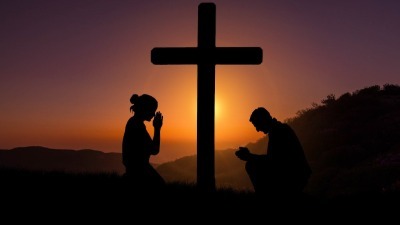
(Image by Gerd Altmann from Pixabay)
Nick Thompson, 05/12/2025