Being Practical (Are You Ready: Part 6)
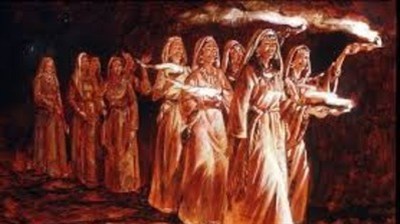 Having set out the table of events in Matthew 24 (as outlined in the previous instalment), Jesus goes on to illustrate, in very practical terms, how we should prepare ourselves for these days.
The Ten Virgins (Verses 1-13)
The role of the virgins, or bridesmaids, was, as it still is today, to prepare and assist the bride in her preparations to meet the bridegroom. So, this is a picture that should speak to all of us in this season. It is the job of each of us to prepare the bride.
The scripture clearly states that there were ten virgins. This is a number that represents the completion of God’s divine order; holiness; His guidelines (Law), or a period of testing. We are arguably living in the season that will lead up to the completion of all things, during which we will go through a period of great testing. We must not only know God’s word but also seek to carry it in our hearts, teach it to others and obey it ourselves.
The fact that these ten were virgins adds to the insights: they had not engaged in sexual intercourse and were therefore deemed to be morally pure; innocent in the things of the world, undefiled, untainted by sin, its desires and consequences; having integrity. Therefore, these ten were able to be set apart in their hearts to God in a way of life that married women could not. They could give themselves wholeheartedly to their assignment, to prepare the bride, because they were not distracted by husbands, families or other commitments. Therefore, the metaphor of a virgin can also be used to illustrate the covenant relationship between God and His bride.
All ten virgins carried lamps. They were waiting for the call informing them that the bridegroom was on his way, which would mean they would join in a large outdoor celebratory procession. Their lamps would have needed replenishing regularly.
The metaphor of a virgin can also be used to illustrate the covenant relationship between God and His bride.
We are told that five of the virgins were foolish and five were wise. The number five speaks to us of God’s grace and favour, so it is entirely an act of Jesus’ grace that He is illustrating this truth to us in the hope we will understand and glean something very important from it.
It will help in our understanding if we define the terms ‘foolish’ and ‘wise’:
• To be foolish is to lack good sense and judgement; to be silly, stupid, rash, thoughtless, reckless or unwise:
• To be wise is the exact opposite: having or showing the ability to make good judgments, based on a deep understanding and experience of life, to be astute, prudent, shrewd, informed, aware and clued-up.
The wise maidens realised that to make it to the Chuppah - under which the marriage ceremony would take place - and then onto the wedding banquet, would use a great deal of oil. So, they prudently took what they considered to be sufficient spare oil in jars. They were prepared. The foolish maidens failed to think through all the consequences, to weigh up what the lengthy procession would mean for them, so they acted rashly and did not make any provision. That lack of judgement cost them dearly.
It is important for us to realise that in the traditional Jewish wedding ceremony, nobody knows the day or the hour when the wedding will take place, except for the bridegroom’s father.
So, despite being prepared to escort the bride to her wedding, all the virgins could do was wait. And wait they did; so long, in fact, that they all fell asleep, which means that the lamps of all ten went out; those of the wise maidens as well as those of the foolish.
Just when they were all asleep and no longer alert, the shout of the imminence of the bridegroom’s arrival was given and they all woke up suddenly, throwing off their bleary eyes and rushing to trim their lamps - cutting off the charred edges where the rag had burnt down previously - and soaking them afresh with oil. In the trimming process, the foolish would have shaved off any dried-in oil and without having brought any fresh supply, their lamps would have gone out very quickly - hence their panicked demands for the wise to give them some of their oil.
True covenant friendship means we will do whatever it takes to please the other party and stay in the intimacy of fellowship.
Shrewdly, the wise refused to hand over any of their supplies, telling the foolish to go and buy their own! But whilst they were gone to the store, the bridegroom arrived, the procession got under way, the wedding took place and the door to the banquet was firmly closed to the foolish virgins. Jesus ends with a firm warning:
“Therefore keep watch, because you do not know the day or the hour.”
The Virgins - Purity
Please read Psalm 119:1-16.
As stated above, the virgins were deemed to be morally pure; innocent in the things of the world, undefiled, untainted by sin, its desires and consequences; and having integrity.
Let us be honest; no-one likes living in close proximity with someone who does not wash regularly or smells! It is simply unpleasant and in today’s world, unnecessary. True covenant friendship means we will do whatever it takes to please the other party and stay in the intimacy of fellowship, so it should be obvious that at all times we need to aim for cleanliness and purity in our walk with God – even more so as we consider the very high stakes as we prepare ourselves to live through the increasingly dark and testing days before us.
Spiritual uncleanness causes a barrier between us and God because we automatically withdraw to what we consider to be a safe distance! Let us be clear about this; it is not God who does the withdrawing, it is us. I know when I have left the place of purity and intimacy because I no longer feel the Spirit’s closeness and I struggle to hear His voice. Like Adam and Eve, I try to hide and cover up until the light bulb moment where I wake up and realise I am truly missing His fellowship. There is a way back; it is through confession, repentance and a sincere re-consecration.
There is a way back; it is through confession, repentance and a sincere re-consecration.
Whilst we live and breathe, we will continue to clumsily say things that hurt or offend or find that temptation overwhelms us and we then have to cope with the resulting mess. We will not be wholly pure and sanctified (set apart to God) until the day we die and receive our new spiritual body. Nevertheless, we should not allow these struggles to become a barrier which will prevent us from pressing deeper into building our relationship with God. He accepts us as we are but if we seek a deeper level of fellowship and intimacy with the bridegroom, we cannot stay as we are.
‘How can a young person stay on the path of purity? By living according to your word.’ (Ps 119:9)
God uses His word - whether spoken, written or intuitive - but inspired by the Holy Spirit to illuminate the areas in our heart where He is still not Lord.
In the reading above, the Psalmist understands our dilemma. How can we stay pure? By obeying God’s word. How do we know what His word says? We read, study, meditate and memorise it. It is the very word of God, inspired by the Spirit’s power, that gives us the desire to be different, leads us to repentance, and assures us of our renewal and restoration. Therefore, a significant part of our preparation needs to be a deliberate choice to pursue holiness and purity, to consciously choose to set ourselves apart from many would-be ‘others’, to belong wholeheartedly to only one bridegroom.
Speaking spiritually, these ‘others’ are anybody or anything that we place higher in value than our relationship with the Lord. We might call these the various idols of our hearts; things like financial security, career, family, property, even our church or ministry. They are the things we may have allowed to take root in our hearts and, whilst they remain there, they will always move us to selfishly serve them and not be as wholeheartedly for God as we might say we want to be, or give the impression to others that we are.
If we are going to stand firm in the days to come, we must begin this process of realignment now.
Scripture plainly teaches that the Lord hates all forms of idolatry and our response must be to repent and allow our priorities and values to be realigned, with Him at the centre. If we are going to stand firm in the days to come, we must begin this process of realignment now.
Idolatry is, of course, sin but there are many other forms of sin that prevent us from either receiving the fulness of God’s love for us or prevent us from freely sharing it with others. For example, there is unforgiveness, prejudice, dishonesty, sexual impurity and judgementalism, as well as various forms of habitual sin, which I do not need to name.
‘Sow righteousness for yourselves, reap the fruit of unfailing love, and break up your unploughed ground; for it is time to seek the Lord, until he comes and showers his righteousness on you.’ (Hos 10:12)
As those called to prepare the bride, it would be hypocritical of us to assume we should not first apply this word to our own lives. So, to myself and to everyone reading this, I say; “It is time to break up your unploughed ground”. Anything that has become an uncultivated waste ground, places where we have allowed the rubbish and weeds to settle, things that are unhelpful and unfruitful, God says plough it up, burn the rubbish and get rid of the weeds. This is something only you can do. In New Beginnings Discipleship I can give you the tools, but I cannot weed the garden of your heart for you. We each need to take our own responsibility to deal systemically with the sin in our lives; it is the pruning back so that we can produce a stronger, more vigorous growth, which in turn produces more fruit.
If we seek Him with all our hearts, He will come and shower His righteousness upon us.
In gardening terms ‘no-dig’ has become very fashionable. But there is a danger in minimal cultivation – only breaking up the surface. A hard layer develops, and roots cannot penetrate the soil. Do not be tempted to only deal with things on the surface of your life and allow a hardness of pride to develop underneath. The season we are living in requires each of us to allow God in to deal with the deep things in our lives so that He might give us a heart that is supple, sensitive to His voice and beats in rhythm with His heart.
“I will give you a new heart and put a new spirit in you; I will remove from you your heart of stone and give you a heart of flesh.” (Ezek 36:26)
When we truly love someone, we will do anything for them and, in our personal preparation as part of God’s bride, He is calling each of us to go in deeper with Him, to set ourselves apart to, and for, Him in such a way as we have never done before. The parable clearly illustrates the great cost paid by those who did not make the preparations required. If we seek Him with all our hearts, He will come and shower His righteousness upon us. His righteousness leads to our living in the fullness of who we are in Christ, in the power of the gospel of the kingdom, and with all that means to influence and impact a lost and hurting world.
Think: Take some time now to sit quietly and ask the Holy Spirit to highlight any areas in your life that might need ploughing up. Write down what He shows you. What will you do next?
(image care of livingfaith.blog)
Sarah Winbow, 04/02/2026