Sarah Mullally: A Different Kind of Enthronement
Reflections on the instalment of the first female archbishop of Canterbury
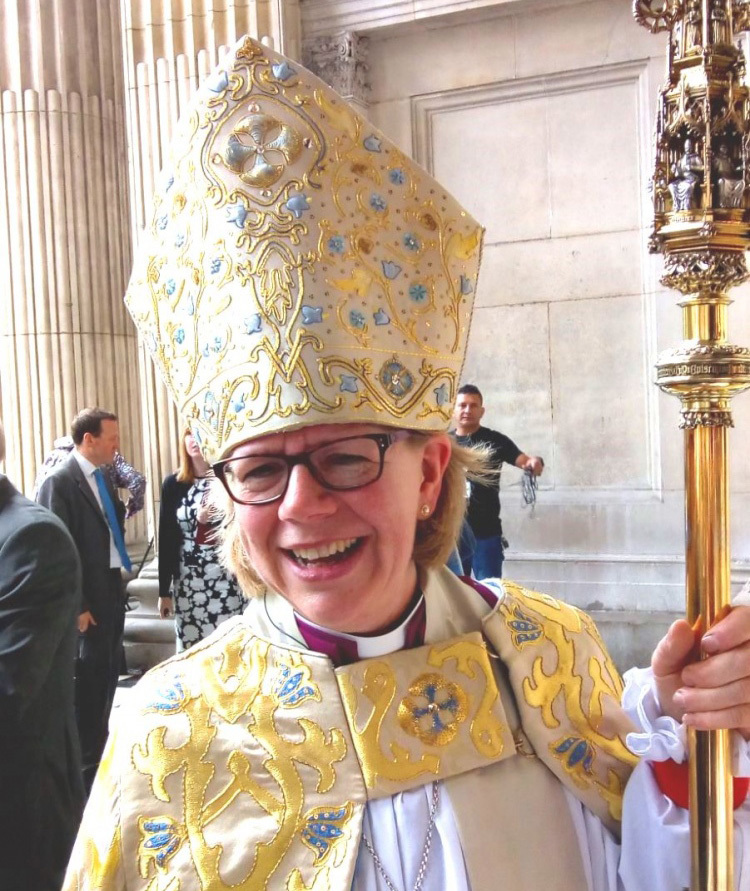 When Sarah Mullally took her oath of office at Canterbury Cathedral on March 25th, it marked more than just a ceremonial moment. For some observers, it represented a significant shift in the identity and direction of the Church of England.
The pace of change has been striking. It has been just over three decades since the Church of England ordained its first women priests in 1994. Now, within a single generation, a woman has taken one of the most senior positions in the Church.
To some, this moment feels like part of a much longer historical movement. Ever since the Act of Supremacy 1534 under Henry VIII separated the Church of England from Rome, there have been periods of distance and moments of renewed closeness between the Anglican and Roman Catholic traditions. Mullally’s enthronement, in the eyes of some, may be seen as another step in that ongoing story.
Her coronation will be seen by some as another ‘Great Leap Forward’ towards the union of the two Churches, a process which began in the late eighteenth century, under pressure from the Papacy, and was strengthened with the Roman Catholic Relief Act of 13 April 1829, which allowed Roman Catholics to be appointed to high office in the government and the judiciary.
Symbolism in the Ceremony
Several elements of the service stood out to those paying close attention.
Mullally’s enthronement, in the eyes of some, may be seen as another step in that ongoing story.
The date itself, 25th March, coincided with the Christian feast of the Annunciation, traditionally associated with the Virgin Mary. During the service, Mullally referred to Mary as ‘the Mother of God,’ a title more commonly used in Roman Catholic tradition than in Protestant settings. She reflected on Mary’s trust in an uncertain future, using it as a theme for her own calling.
Another notable detail was the Bible used for the oath: the Saint John’s Bible, based on the New Revised Standard Version Catholic Edition. This edition includes books often referred to as the Apocrypha, texts that are accepted in Catholic and Orthodox traditions but not always in traditional Protestant ones, despite being read, studied and quoted by Jesus and the disciples.
Entering the Cathedral
Before entering the cathedral, Mullally took part in a traditional ritual. She knocked three times on the large wooden doors and answered the formal question from inside: Who are you, and why do you request entry? Once inside, she was greeted by a congregation of more than 2,000 people. The audience reflected the global and diverse nature of the modern Church; political leaders, members of the royal family, including Prince William and Catherine Princess of Wales, bishops from around the world, and representatives from different Christian traditions.
The ceremony itself blended tradition and global expression. At one point, a group of dancers from Africa performed, adding a vibrant and unexpected dimension to the proceedings. Mullally was then formally seated in two historic chairs, including the ancient Chair of St Augustine, symbolising her role as a leading figure in the worldwide Anglican Communion.
The event also highlighted the growing role of women in church leadership, something Mullally herself addressed directly.
Echoes of Rome
There were also clear signs of connection with the Roman Catholic Church. Representatives from the Vatican were present, and Mullally wore a ring originally given to her predecessor by Pope Paul VI in 1966, an earlier gesture of unity between the two traditions.
Supporters of women’s ordination, including Catholic groups, attended and welcomed her appointment. The event also highlighted the growing role of women in church leadership, something Mullally herself addressed directly, noting that equality has not yet been fully achieved.
Her Message
In her speech, Mullally acknowledged past failures within the Church, particularly in safeguarding. She spoke openly about the need for reform and expressed compassion for victims of abuse; remarks that were warmly received.
She also touched on divisions within the Church. Without naming specific issues, she spoke about the importance of building relationships and overcoming barriers. Her message centred on reconciliation, bringing people together rather than allowing differences to deepen.
Some critics argue that it reflects a shift in theological emphasis, particularly in how it handles contested passages.
She summed her message with the words, “I solemnly commit to proclaiming the Gospel of Christ, who reconciles us to God and breaks down the walls that divide us.”
The Bible Controversy
The choice of the Saint John’s Bible also drew attention. This version, based on the NRSV Catholic Edition, is known for using more inclusive language and for presenting certain passages differently from more traditional Protestant translations. Some critics argue that it reflects a shift in theological emphasis, particularly in how it handles contested passages.
For example, it has been most frequently accused of using gender-inclusive language, e.g. replacing “men” with terms like “mortals” or “human beings”.
The Bible itself is also a remarkable work of art. Commissioned in the late 1990s, it was hand-written and designed by calligrapher Donald Jackson. Every page was carefully crafted, combining traditional techniques with modern design. The project took over a decade to complete, resulting in a richly illustrated text intended to be both beautiful and accessible.
Tough Questions
Taken together, the ceremony reflected a Church in transition, holding onto ancient traditions while also seeking to adapt to modern realities. For some, this represents welcome progress. For others, it raises difficult questions about continuity and change – being rooted in history, yet continually evolving.
How will she respond to the formidable challenges of Islam, high immigration levels, and the massive test caused by illegal immigration.
Tougher questions relate to Mullally’s likelihood of making an ameliorative impression on the sorrowful state of the Anglican Church. Will she continue the institution’s existing policy of blandness, ‘wokeness’ and utter irrelevance to the great majority of the UK population? Will C of E membership continue to plummet under her leadership?
How will she respond to the primary challenges facing the Church in the 21st century – the challenge of declining attendances and ageing congregations; that of growing secularisation; the formidable tests posed by Islam, high immigration levels, and illegal immigration. Then there’s the issue of engaging younger generations; of internal divisions and the Church’s sexual abuse scandal; and not least of theological division within the Church.
Will she boldly proclaim the Christian gospel – the ‘good news’ that sinners can be reconciled to God through the substitutionary death and resurrection of Jesus Christ, that salvation is a free gift of grace received through faith alone?
Ultimately, one might wonder, what difference, if any, Mullally’s headship of the Church of England will practically make to either Christian or secular life in this nation.
Adapted with permission - and with some significant additions - from news stories that originally appeared in British Church Newspaper.