A Pattern for Renewal
2 Chronicles 29: Hezekiah’s Restoration of Temple Worship
Introduction
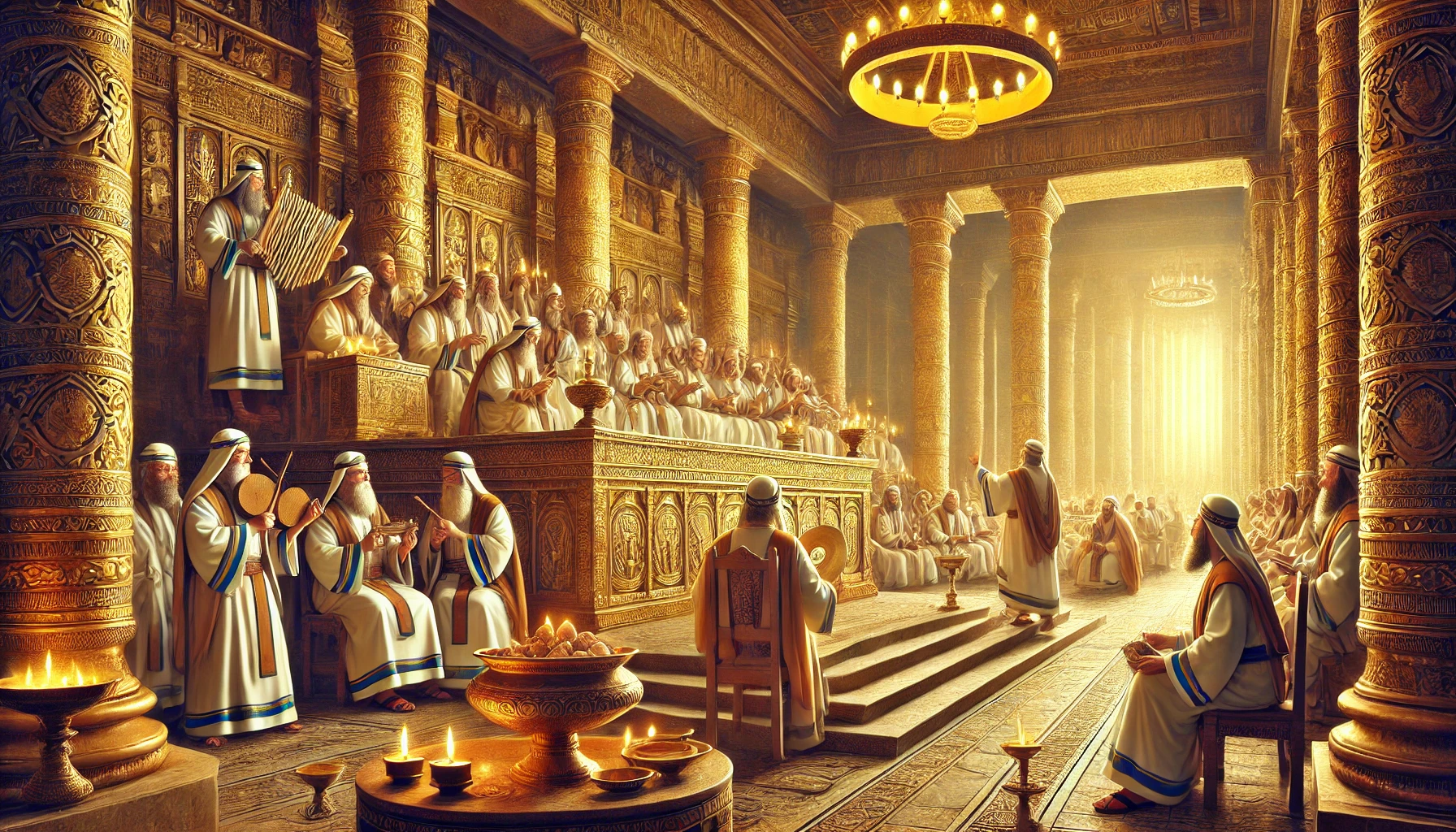 2 Chronicles 29 marks a dramatic spiritual turning point in the history of Judah. Following the disastrous and idolatrous reign of King Ahaz, his son Hezekiah comes to the throne and immediately initiates a national reformation. This chapter is more than a historical narrative; it is a model for spiritual revival. Hezekiah’s actions reflect a heart devoted to God, an understanding of covenantal responsibilities, and a determination to restore sacred order.
Considering themes of covenant restoration as well as sacred space and divine order, this study explores how Hezekiah’s reforms mirror a cosmic return to alignment with YHWH’s rule. The temple, a focal point of Israel’s spiritual life, becomes the symbol of both the nation’s decay and its renewal.
1. A Righteous Beginning (2 Chronicles 29:1-2)
“Hezekiah began to reign when he was twenty-five years old... And he did what was right in the eyes of YHWH, according to all that David his father had done.” (vv. 1-2,
ESV)
In contrast to his father Ahaz, Hezekiah is introduced as a king who walks in the legacy of David. This is a theological distinction, not just a genealogical one. To walk in David’s ways is to seek God’s heart (cf. 1 Samuel 13:14).
The temple, a focal point of Israel’s spiritual life, becomes the symbol of both the nation’s decay and its renewal.
It is worth highlighting here Hezekiah’s immediate pivot toward covenant renewal. His faith was not inherited passively; it was embraced deliberately. This decision shows spiritual clarity and courage, especially considering the national apostasy he inherited.
Life Application: Faithfulness starts with a decision. Spiritual renewal often begins with one person’s choice to do what is right in God’s eyes (Joshua 24:15).
2. Opening the Doors: Restoring Sacred Access (v. 3)
“In the first year of his reign, in the first month, he opened the doors of the house of YHWH and repaired them.” (v. 3)
Hezekiah does not wait. In the first month of his reign, he reopens the temple, a direct reversal of Ahaz’s closure (2 Chron. 28:24). The temple is not just a building; it is the nexus of heaven and earth, God’s footstool (cf. Isaiah 66:1).
This is of immense cosmic significance. Reopening the temple restores sacred space, reclaiming Judah’s spiritual geography from demonic incursion and pagan desecration. This act is a declaration of YHWH’s kingship.
Reopening the temple restores sacred space, reclaiming Judah’s spiritual geography from demonic incursion and pagan desecration.
Life Application: When spiritual doors have been shut, whether in families, churches, or communities, godly leadership must reopen access to God through repentance and restoration.
3. Consecration of the Priests and Levites (vv. 4-11)
“Sanctify yourselves, and sanctify the house of YHWH... and carry out the filth from the Holy Place.” (v. 5)
Hezekiah calls the Levites and priests to purify themselves and the temple. This is both physical and spiritual cleansing. The sacred must not remain defiled.
“Our fathers have been unfaithful... Therefore the wrath of YHWH came on Judah and Jerusalem...” (vv. 6–8)
Hezekiah’s confession is national and intergenerational. He doesn’t whitewash history; he names sin and its consequences.
This is acute covenant awareness. The blessings and curses of Deuteronomy 28 are not theoretical; they shape history.
Life Application: Cleansing begins with confession. Revival requires leaders who acknowledge sin, take responsibility, and restore spiritual order (1 John 1:9).
4. Obedient Response of the Levites (vv. 12-19)
“Then the Levites arose... and they gathered their brothers and consecrated themselves...” (vv. 12-15)
Over sixteen days, they cleanse the temple from within and without, removing years of accumulated defilement.
The Levites respond faithfully. Their obedience is immediate and unified. Over sixteen days, they cleanse the temple from within and without, removing years of accumulated defilement.
“We have cleansed all the house of YHWH... and have restored all the utensils...” (v. 18)
This is a restoration of holiness and function. The temple is not just clean; it is operational. Restoring the sacred utensils signals a re-inauguration of divine order. The priesthood is back in place; the temple is ready for divine presence.
Life Application: God honours faithful labour. Restoration is hard work, but it is necessary for sustained revival.
5. Hezekiah Leads in Worship and Atonement (vv. 20-30)
“Hezekiah the king rose early and gathered the officials... and they brought seven bulls, seven rams... for a sin offering.” (v. 20–21)
Worship begins with atonement. Before the people can rejoice, the sin of the nation must be dealt with. The king and leaders model humility by placing their hands on the animals, symbolising substitution.
“The priests killed them and made a sin offering with their blood... to make atonement for all Israel.” (v. 24)
The king and leaders model humility by placing their hands on the animals, symbolising substitution.
There is a clear communal aspect of atonement. It is not just personal but national. True revival engages the whole body.
Then comes praise and music:
“The song of YHWH began... the whole assembly worshiped, and the singers sang...” (vv. 27-30)
Worship follows atonement. The divine presence returns, and joy erupts.
Life Application: Real worship flows from a cleansed heart. Don’t skip repentance. God’s glory inhabits prepared hearts (Psalm 51:17).
6. A Generous and Overflowing Response (vv. 31-36)
“Then Hezekiah said, ‘Now that you have consecrated yourselves... bring sacrifices and thank offerings...’” (v. 31)
The people respond with overwhelming generosity. There are too many offerings for the priests alone to handle.
The revival is rooted in a restoration of sacred space which has cosmic consequences.
“So the service of the house of YHWH was restored. And Hezekiah and all the people rejoiced...” (vv. 35-36)
This is a revival that touches every level: leadership, worship, repentance, generosity, and national joy. The revival is rooted in a restoration of sacred space which has cosmic consequences. When YHWH is enthroned again in the temple, His blessing flows to the people. And this the essence of covenant renewal: a people turning back to their God in obedience, joy, and community.
Life Application: True revival ends in joy. When God is restored to the centre, everything else aligns.
Conclusion
2 Chronicles 29 offers one of the most hopeful scenes in all of Scripture. After the darkness of Ahaz’s reign, Hezekiah steps in as a reformer, a restorer, and a worshipper. His leadership results in a temple cleansed, a priesthood renewed, a people rejoicing, and a nation back in alignment with God.
This chapter is not merely historical. It is instructional. In a world prone to spiritual decay, Hezekiah’s story calls us to wholehearted devotion, bold reform, and humble worship. Like Hezekiah, we are called to act quickly, cleanse thoroughly, worship deeply, and lead courageously.
Let us pray for leaders like Hezekiah – and let us become people who respond as the Levites and the congregation did: with consecration, joy, and generosity.
(top image - www.worshipleader.com)
Nick Thompson, 30/04/2026