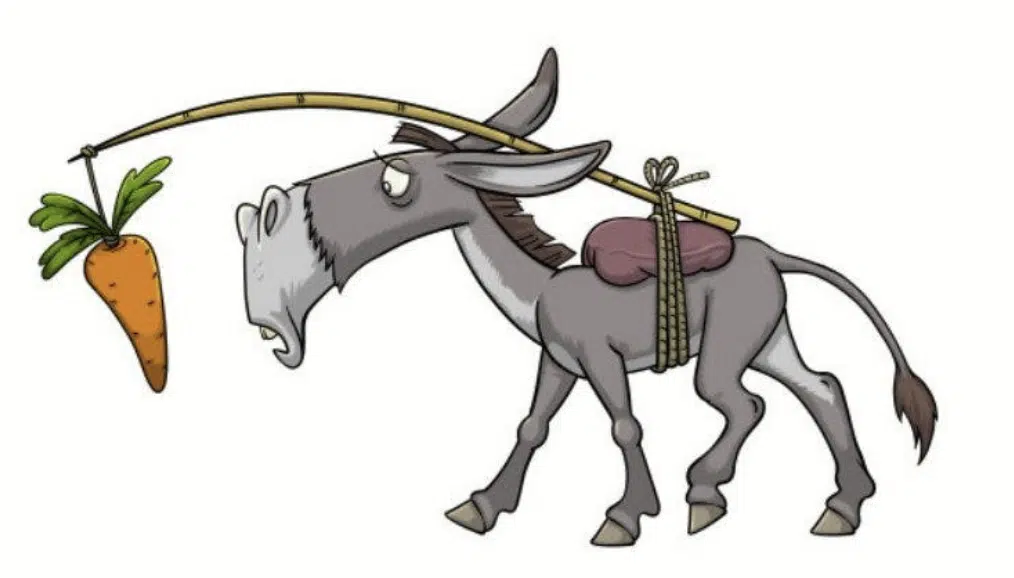
The Politics of Carrot & Stick
The Iran crisis, the failures of Western governments, and the shaping of the international order
 Among the axioms that I was raised with and which have shaped much of how I view both people and the world, there are two that currently feel very relevant. The first is simple: treat others as you would wish to be treated yourself. The second is equally direct: when confronted by a bully, the only meaningful response is sharp and unmistakable retaliation, even if it costs you personally. Weakness, I was taught, only invites further aggression.
Holding justice and wisdom together
As I have grown older, life has both tested and refined my understanding of those principles. I still believe deeply in both of them. Compassion, dignity, and mutual respect remain essential foundations for any healthy society. Equally, evil unchecked does not become kinder; it becomes bolder. History repeatedly demonstrates that aggression tolerated eventually consumes more lives than aggression confronted.
Yet experience has also taught me that wisdom is not always expressed through direct force alone. Sometimes the most effective response is not frontal, but oblique. Sometimes pressure applied indirectly achieves what open confrontation cannot. Sometimes patience, leverage, restraint, and carefully aligned incentives can accomplish more than raw escalation while still remaining faithful to the underlying moral truth that evil must not simply be indulged or appeased.
Sometimes pressure applied indirectly achieves what open confrontation cannot.
From a Christian perspective, this tension matters deeply. Christ calls us to love our neighbour, pursue peace, and refuse hatred. Yet Scripture also recognises the reality of wickedness, the responsibility to defend the vulnerable, and the danger of leaders who mistake passivity for righteousness. Mercy without truth becomes sentimentality; strength without righteousness becomes tyranny. The challenge is learning how to hold justice and wisdom together at the same time.
Accommodation over accountability
What follows is an attempt to wrestle honestly with that tension in the context of the present crisis surrounding Iran, the failures of Western governments, and the shifting calculations now shaping the international order.
The present situation surrounding Iran did not emerge in a vacuum. It is the result of decades in which the nations of the West repeatedly chose accommodation over accountability, economic convenience over moral clarity, and political expediency over justice. In doing so, they helped create the conditions in which terror networks could flourish, innocent lives could be destroyed, and authoritarian regimes could deepen their grip on power.
From a Christian perspective, governments are entrusted by God with the responsibility to restrain evil, defend the innocent, and uphold justice. Yet for more than forty years, Iran’s regime has faced insufficient consequences for sponsoring terrorism, funding proxy militias, pursuing nuclear deception, taking hostages, and enabling the murder of civilians across the Middle East. Again and again, Western governments condemned violence rhetorically while continuing policies that allowed the machinery behind that violence to expand.
Calling evil good
Hezbollah did not become one of the world’s most heavily armed non-state actors overnight. It grew because Iran was permitted to fund and arm it with limited resistance from the international community. Hamas was emboldened through decades in which terrorism was too often excused, rationalised, or politically rewarded rather than decisively confronted. The horrors of October 7 did not appear suddenly from nowhere; they emerged from a culture of impunity sustained by weak moral leadership and inconsistent international resolve.
A society that loses its ability to speak truth clearly will eventually lose its ability to defend justice courageously.
The same pattern extends beyond Iran itself. Turkey has continued serving as a financial corridor for Iranian interests because the economic and diplomatic costs have remained manageable. Pakistan has continued balancing between cooperation and duplicity because the West largely moved on from the profound reality that Osama Bin Laden was found living near one of Pakistan’s most significant military institutions. The Kurdish people continue to approach international promises with caution because history has repeatedly taught them that Western support is often temporary, conditional, and vulnerable to political convenience.
Even parts of the international media bear responsibility. In an age of information warfare, propaganda is frequently laundered through respected institutions without sufficient scrutiny. Narratives shaped by terrorist organisations are too often amplified in ways that blur moral distinctions between aggressor and victim. A society that loses its ability to speak truth clearly will eventually lose its ability to defend justice courageously.
This is not merely a geopolitical failure but a spiritual and moral one. Scripture teaches that peace cannot be built upon the toleration of evil, nor justice upon selective outrage. Nations reap consequences when they continually compromise truth for stability or profit. The prophet Isaiah warned against calling evil good and good evil; yet much of modern diplomacy has functioned precisely through moral ambiguity.
China calls
The strategic landscape shifted further this week during the China–US summit, where Beijing publicly aligned itself with Washington on two issues of enormous significance: that Iran must never acquire a nuclear weapon, and that the Strait of Hormuz must remain open to international shipping without militarisation or coercion. Whatever diplomatic language surrounded the summit, the meaning was unmistakable. China, the principal buyer of Iranian oil and one of Tehran’s most important international backers, has now signalled publicly that there are limits to what it is willing to tolerate from the Iranian regime.
Great powers rarely act from moral principle alone.
This matters because Iran’s survival has depended not only upon its own aggression, but also upon the willingness of global powers to shield, finance, or excuse it when convenient. For years, Western governments pursued short-term stability through compromise, while China benefited economically from Iranian energy exports without assuming corresponding responsibility for the instability those revenues helped fund. Now, however, the threat to the Strait of Hormuz directly affects China’s own economic security. Beijing’s calculations are no longer theoretical. An unstable Gulf threatens Chinese growth, energy supply chains, and domestic stability. That changes the incentives.
Taiwan talk
Yet the summit also revealed another uncomfortable truth: great powers rarely act from moral principle alone. China’s willingness to pressure Tehran appears inseparable from its expectation that Washington will show restraint elsewhere, particularly regarding Taiwan. Throughout the summit, Taiwan remained the clearest underlying flashpoint between China and America. Beijing continues to regard the island as a core national interest and a defining red line in its relationship with the United States.
In this context, the delayed American armaments package for Taiwan is being interpreted by many observers not merely as administrative delay, but as part of a wider geopolitical negotiation. China plays a constructive role in constraining Iran and stabilising Hormuz, while the United States lowers the temperature around Taiwan, at least temporarily. Whether formal or informal, this reflects the reality of modern diplomacy: pressure and concession operating simultaneously across multiple theatres.
From a Christian perspective, this should provoke both realism and caution. Scripture recognises that nations pursue interests, alliances, and power. Yet it also warns repeatedly against placing ultimate trust in princes, empires, or military arrangements. The danger for Western governments is not merely strategic weakness, but moral inconsistency: condemning aggression in one region while tolerating coercion in another; defending sovereignty selectively depending upon economic necessity or geopolitical convenience.
The world order is struggling to contain the consequences of its own compromises.
Struggling world order
The irony is striking. After decades in which Western leaders tolerated or enabled conditions that strengthened Iran’s terror network, the task of restraining Tehran now depends in part upon transactional cooperation with another authoritarian power whose ambitions are themselves destabilising. This is not evidence of moral clarity triumphing, but of a world order struggling to contain the consequences of its own compromises.
At the same time, Christians must resist simplistic triumphalism. The goal cannot merely be domination, humiliation, or endless war. True peace requires both justice and truth. It requires protecting innocent life, restraining violent powers, and creating conditions in which ordinary people, including the Iranian people themselves, may live free from fear, corruption, and oppression.
There remains a narrow opportunity for de-escalation. China’s public declaration that Iran cannot possess nuclear weapons, combined with its insistence that Hormuz remain open, places genuine pressure on Tehran in ways previous diplomatic statements did not. China’s leverage is real because Iran’s economic survival increasingly depends upon Chinese markets and political cover.
The big question
Yet none of this resolves the deeper crisis. The same summit that produced cooperation over Iran also exposed the fragility of peace between the world’s great powers themselves. Taiwan remains a potential ignition point for future conflict between America and China. The world is watching two rival powers attempt to manage one crisis while quietly negotiating the boundaries of another.
The pressure has not disappeared. It has merely shifted shape.
Western governments now face a deeper question than strategy alone. Will they continue managing crises temporarily while avoiding moral accountability for the environment they helped create? Or will they recover the courage to pursue justice consistently, even when doing so carries political or economic cost?
The answer will shape not only the future of the Middle East, but also the moral credibility of the West itself. The pressure has not disappeared. It has merely shifted shape.
(image, c/o https://storytellingstrategist.com/)
Nick Thompson, 29/05/2026