The Silence of Heaven and the New Exodus
When Heaven took back the Nations 5
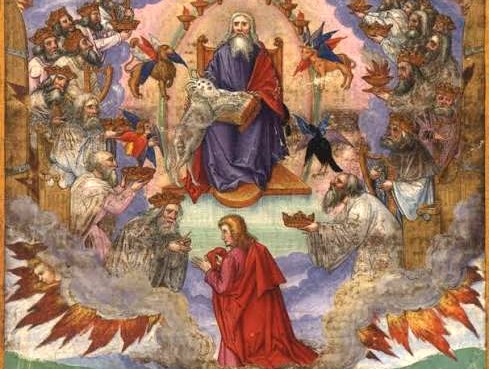 “When the Lamb opened the seventh seal, there was silence in heaven for about half an hour.” (Revelation 8:1)
There are silences that speak louder than words: the silence of grief; the silence before a bride enters the church; the silence in a courtroom as the verdict is about to be read; the silence before a commander gives the order that will change the course of a battle. Revelation 8 begins with such a silence.
Until now heaven has been filled with sound. The living creatures have cried without ceasing: “Holy, holy, holy…” The elders have cast their crowns before the throne. Millions of angels have filled the heavens with praise. Every creature has joined the worship of the Lamb.
Then... Nothing. For perhaps the first time since John entered heaven, every voice falls silent. The Divine Council waits. The angels wait. The elders wait. Creation itself seems to hold its breath. Why? Because heaven knows what is about to happen. The covenant King is about to answer the prayers His people have prayed for centuries.
John Expects Us to Remember Habakkuk
John never explains the silence. He does not need to. His readers know the prophets. Habakkuk had written: “YHWH is in His holy temple; let all the earth keep silence before Him,” (Hab 2:20). Zephaniah begins his great prophecy of the Day of YHWH in much the same way: “Be silent before the Lord YHWH! For the day of YHWH is near,” (Zeph 1:7). Silence, in Scripture, often precedes divine intervention. It is the stillness before the Judge rises. The hush before the King speaks. The pause before justice moves from decree to action. Heaven is not uncertain; it is attentive.
The pause before justice moves from decree to action. Heaven is not uncertain; it is attentive.
The Prayers Beneath the Altar
John next sees an angel standing at the heavenly altar with a golden censer. Incense is added. Then comes a remarkable statement: “The smoke of the incense, together with the prayers of the saints, rose before God,” (Rev 8:4). Immediately our minds should return to the fifth seal. The martyrs had cried: “How long, O Lord?” Now their prayers rise before the throne. This is not a different scene; it is the answer.
The Greek word for prayers is ‘proseuchai’; they are not wishes, they are not vague hopes, they are Covenant petitions. Heaven has heard every one. How many prayers appear unanswered? How many cries seem to vanish into silence? John quietly reminds us that no faithful prayer is ever lost. God stores them, God remembers them, and God answers them at precisely the right moment. The censer is then filled with fire from the altar and cast upon the earth. Prayer becomes judgment. Mercy has been patiently extended. Justice now proceeds.
John Expects Us to Remember Egypt
The trumpets begin. If we read them merely as future disasters, we miss John’s point. He is retelling the Exodus. Water becomes blood. Darkness covers the earth. Locust-like creatures emerge. The language is unmistakable.
However, we must realise that the Exodus was never simply a rescue mission; it was also a confrontation. Again, and again YHWH declared: “Against all the gods of Egypt I will execute judgment: I am YHWH,” (Ex 12:12). We do well to read that statement carefully. YHWH was not merely acting against Pharaoh, but against Egypt’s gods. (The Hebrew word is ‘ֱelohim’).
We must realise that the Exodus was never simply a rescue mission; it was also a confrontation.
The plagues exposed the impotence of every false power that claimed authority over God’s people. The Nile could not save; Ra could not overcome darkness; Pharaoh himself proved powerless before the covenant God. The Exodus was a cosmic victory as much as a political one. John now applies the same pattern globally. The final Exodus has begun.
The Trumpets Are Covenant Warnings
Trumpets in Israel were rarely instruments of entertainment. They gathered the assembly, announced festivals, summoned armies, and warned of danger. Trumpets declared the presence of the King. The Hebrew word, ‘shofar’, carried covenant significance. Joel cried: “Blow the trumpet in Zion.” The prophets repeatedly used trumpets to announce the Day of YHWH. So do the angels.
It is noticeable that the trumpet judgments are measured: a third of the earth; a third of the sea; a third of the rivers; a third of the heavenly lights. This repetition matters. Judgment is severe, but it is restrained. Even now mercy remains. God is calling the nations to repentance before the final consummation. This has always been His pattern.
Creation itself responds
We see in the trumpet judgments how much the earth, rivers, and seas are affected, along with the sun, moon, and stars. One feature of Revelation that often escapes modern readers is its assumption that creation itself has heavenly oversight. When the trumpets sound, the whole created order responds, because the King who spoke it into existence has begun reclaiming it.
When the trumpets sound, the whole created order responds, because the King who spoke it into existence has begun reclaiming it.
Paul hints at this in Romans 8. Creation itself has been subjected to frustration and it waits – the JB Phillips translation puts it – “on tippy toes”. Creation itself hopes and John watches that hope beginning to unfold. This should not surprise us. The Divine Council worldview reminds us that God’s government embraces every realm of creation. Creation is neither autonomous nor abandoned; every part of it ultimately answers to its Creator.
The Fallen Star
The fifth trumpet introduces one of Revelation’s most dramatic scenes. John sees “a star fallen from heaven unto the earth,” (Rev 9:1). Notice the wording. John does not see a star falling; he sees one already fallen. Throughout Scripture, stars frequently symbolise heavenly beings. Job speaks of the morning stars singing together. Isaiah compares the king of Babylon to the fallen Day Star. Daniel describes stars cast to the earth. Jesus declares: “I saw Satan fall like lightning from heaven,” (Lk 10:18).
The star receives a key. He does not possess one by right; authority remains delegated. Even rebellion operates only within limits established by God. The abyss is opened (the Greek word is ‘abyssos’, the deep). The immeasurable place, the prison of restrained evil. Smoke rises; darkness spreads. Then come creatures unlike anything found in nature. John reaches for familiar language. They are like locusts, like horses, like warriors.
The repeated comparisons tell us he is describing realities beyond ordinary human experience. Whether one understands these figures symbolically, literally or as apocalyptic imagery, John’s theological point remains unchanged. There are powers of darkness that have long been restrained. The covenant King permits only what serves His greater purposes. The abyss is not outside His authority. It opens only when heaven allows.
John Expects Us to Remember Joel
Again, with his description of battle-ready locusts, John is weaving Scripture together. Joel described locusts advancing like an army as the Day of YHWH approached: their sound resembled chariots, the earth trembled before them. John is not copying Joel, however. He is showing Joel reaching its climactic fulfilment. The prophets speak with one voice.
Heaven has not reached the end of its purpose. One final majestic figure is about to descend.
The Greater Pharaoh
The Exodus was never ultimately about one Egyptian ruler. Pharaoh represented every kingdom that refuses to release what belongs to God: Babel, Egypt, Assyria, Babylon, Rome. Every empire that exalts itself against heaven becomes another Pharaoh. The dragon simply changes uniforms. The Lamb therefore conducts not merely one Exodus but the final Exodus. He comes to liberate a people drawn from every tribe and language. He confronts not merely earthly rulers but the unseen powers that stand behind them. He judges not simply nations but the rebellious spiritual order that has corrupted them.
Looking Towards the Mighty Angel
As Revelation 9 closes, something deeply tragic remains. Despite everything they have witnessed, many still refuse to repent. The problem has never been a lack of evidence. It has always been the condition of the human heart. Yet heaven has not reached the end of its purpose. One final majestic figure is about to descend. Clothed with cloud, crowned by the rainbow, face shining like the sun, feet like pillars of fire, standing upon sea and land. John is about to witness not merely another mighty angel, but, I believe, the covenant Lord Himself publicly claiming the inheritance promised in Psalm 2.
The Exodus is nearing its destination.
The King is about to place His feet upon His world.
Nick Thompson, 23/10/2026