When We Try to Help God Fulfil His Promises
I've been reading Judges 11 recently, and I have to say, this is one of those passages that I think would be very easy to read quickly and move on from, simply because it is so difficult to get your head around.
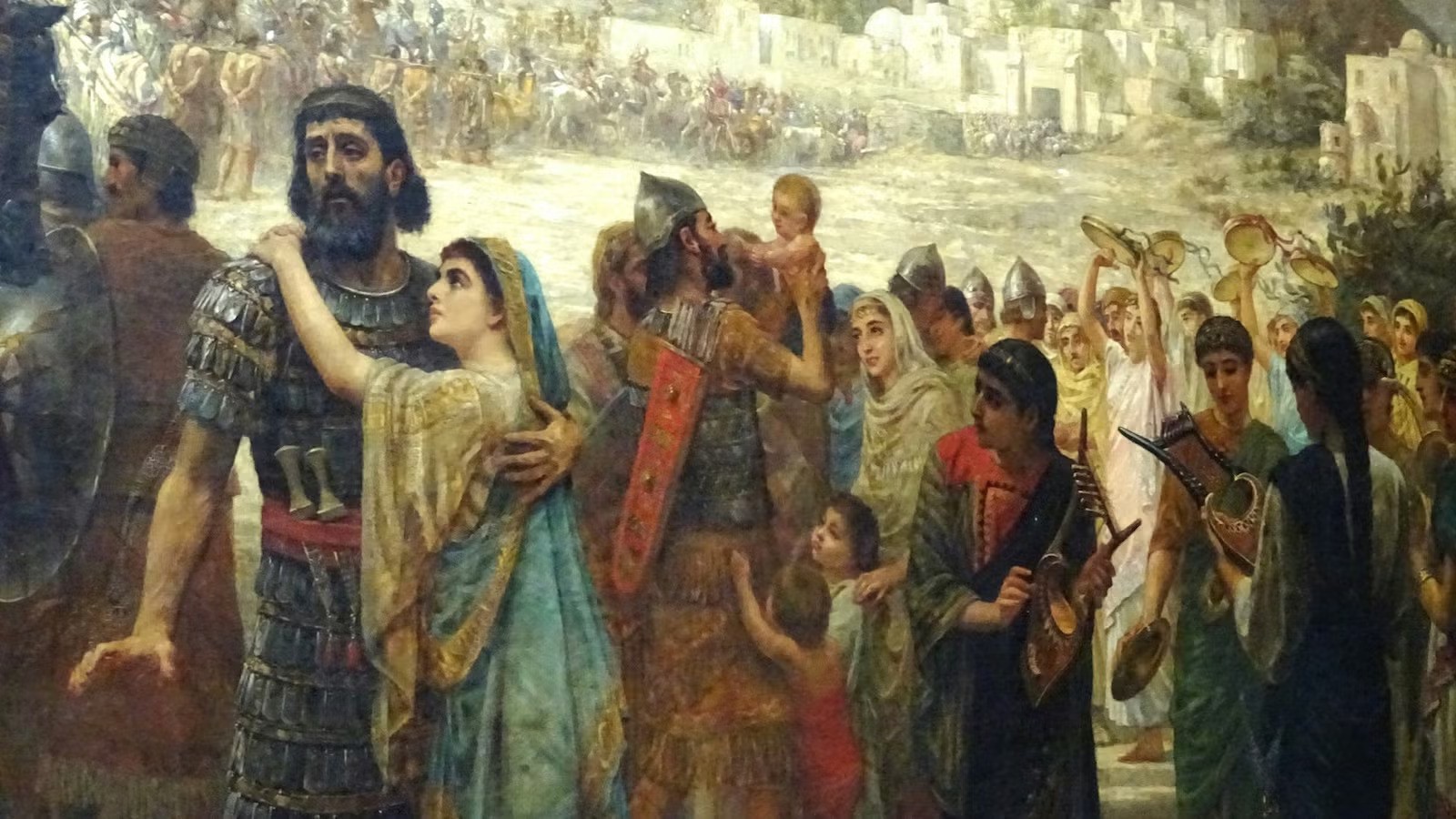 Jephthah’s vow
Jephthah's story is heartbreaking, particularly when we reach the account of his daughter, but the more I've sat with it, the more I've realised there is something here that I had never really considered before.
It has also made me think about how much we can miss in Scripture when we skim over the parts that make us uncomfortable, rather than allowing the Holy Spirit to challenge our understanding and reveal what God wants to teach us through them.
Jephthah was preparing to fight the Ammonites, who were threatening Israel, and Judges 11:29 tells us that “the Spirit of the LORD came on Jephthah.” Immediately afterwards, he makes a vow that if God gives him victory, whatever comes out of his house to meet him when he returns will belong to the Lord and be offered as a burnt offering.
Then he goes into battle, defeats the Ammonites and returns home, only to find his only daughter coming out to meet him, dancing with timbrels in celebration of his victory.
God never asked Jephthah to make that vow, and the Spirit of the Lord had already come upon him before he made it.
It is such a sad account, particularly when you imagine the joy of a daughter welcoming her father home, completely unaware of the promise he has made. Jephthah tears his clothes in grief and tells her that he has made a vow to the Lord that he cannot break.
Acts of presumption
But what really struck me was something that happened before any of this unfolded.
God never asked Jephthah to make that vow, and the Spirit of the Lord had already come upon him before he made it.
I had read that detail before, but this time it made me stop and think because Jephthah was trying to secure something from God when God was already at work. There is no indication that he needed to negotiate for the victory or offer something extraordinary to persuade God to help him, yet he made the promise anyway, and the consequences were devastating.
I wonder how often we can find ourselves doing something similar, perhaps without even realising it. We believe God is leading us, we have prayed about something or feel He has placed a particular promise on our hearts, but then we become so occupied with trying to make it happen that we begin relying more upon our own understanding than upon what He has actually said.
Aligning with His will
What makes Jephthah's story particularly troubling is that when his daughter appears, he seems so convinced that he must honour his vow that he never stops to consider whether what he has promised is consistent with God's commandments.
Not everything done in God's name reflects His will, and we should never confuse religious seriousness with genuine obedience.
God had explicitly forbidden human sacrifice, yet Jephthah appears to believe that because he has spoken a vow in the Lord's name, he is obligated to carry it out regardless of the consequences.
And I think there is a really important lesson in that, because not everything done in God's name reflects His will, and we should never confuse religious seriousness with genuine obedience.
We can be absolutely sincere in what we believe, convinced that we are doing the right thing and even believe we are honouring God, while failing to recognise that our understanding has become more important to us than what He has actually revealed in His Word.
Sometimes genuine obedience requires the humility to stop, acknowledge that we have misunderstood something and allow God to correct us, rather than continuing simply because we have convinced ourselves that changing course would somehow demonstrate a lack of faith.
Abram and Sarai
As I was thinking about that, I found myself going back to Abram and Sarai, because although their circumstances were very different, I could see something of the same struggle between trusting God's promise and trying to bring about the outcome ourselves.
I think there is something very human about their decision because they weren't necessarily rejecting God's promise.
God had promised Abram that he would have an heir and that his descendants would be as numerous as the stars, yet as the years passed and Sarai remained unable to conceive, they began looking for another way to fulfil what God had spoken.
In Genesis 16, Sarai gives Hagar to Abram in the hope that they might build a family through her, and Abram agrees.
I think there is something very human about their decision because they weren't necessarily rejecting God's promise. They were trying to work out how it could happen when everything around them seemed to suggest that it couldn't. They had heard what God had said, but the circumstances weren't changing, and eventually they decided to take matters into their own hands.
What began as an attempt to bring about God's promise led to jealousy, mistreatment and division, with Hagar suffering because of decisions made by others. And I think that is another sobering connection with Jephthah, because when we become determined to make something happen according to our own understanding, the consequences can affect people who had no part in making those decisions.
Yet God's promise to Abram hadn't changed, and when He reaffirmed His covenant, He made it clear that Sarah herself would bear the promised son.
When we become determined to make something happen according to our own understanding, the consequences can affect people who had no part in making those decisions.
By that point, the circumstances appeared even more impossible than they had when God first spoke, but His ability to fulfil what He had promised had never depended upon Abram and Sarai finding a way to make it happen.
Limiting God
That has made me think about how easily we can begin measuring God's faithfulness against what we believe is possible. We look at the circumstances, the time that has passed, the opportunities that haven't materialised and the doors that appear closed, and without really meaning to, we begin limiting what we expect God to do to something that makes sense within our own understanding.
And sometimes I wonder whether we become so fixed upon what we believe success, provision or blessing should look like that we struggle to recognise God's leading when it doesn't resemble what we had imagined.
I have to admit, this is something I struggle with myself, and I know the Lord is working on me in this area. I can be very quick to start thinking about how something might happen, what needs to fall into place and what I can do to move things forward, particularly when it is something I care deeply about or have spent a long time praying for. I don't think that always comes from a lack of faith, but I am learning that there is a difference between being diligent with what God has placed in front of me and feeling as though I need to take responsibility for how everything turns out.
There is a difference between being diligent with what God has placed in front of me and feeling as though I need to take responsibility for how everything turns out.
Isaiah 55 reminds us that His thoughts are not our thoughts and His ways are higher than ours, and I think we can forget just how significant that really is.
We might have a very clear picture of what we are praying for, but God sees the whole story. He knows what lies ahead, what needs to change in us and what He is accomplishing through circumstances we may not yet understand.
Far-reaching purposes
I think about Joseph, who could never have imagined that being sold by his brothers and spending years in Egypt would eventually become part of God's provision for preserving his family. And then there is the coming of Jesus, when so many were looking for a Messiah who would deliver Israel from Roman rule, yet God was accomplishing a redemption far greater than the political freedom they had imagined.
The cross certainly didn't look like victory to those watching Jesus die, yet through His death and resurrection God was accomplishing something that would change eternity.
That makes me wonder how often we judge what God is doing by what we can see in the moment, when His purposes may reach far beyond anything we have considered.
Paul writes in Ephesians 3:20 that God is able to do “immeasurably more than all we ask or imagine, according to his power that is at work within us.”
I love that verse, particularly when I think about the things we can become so consumed with praying for and trying to achieve. Sometimes we may be asking God for something good, but the answer He is preparing could be entirely different from what we expected, and far greater than anything we would have thought to ask for ourselves.
That makes me wonder how often we judge what God is doing by what we can see in the moment, when His purposes may reach far beyond anything we have considered.
That doesn't mean every unexpected circumstance is automatically God's direction, or that faith means sitting back and doing nothing. Scripture is full of people who had to take practical steps of obedience, often without knowing how things would unfold.
But there is a difference between responding to God's leading and striving to secure an outcome because we are afraid that unless we make it happen, it won't happen at all.
Hall of faith
And that brings me back to Jephthah, because there is another detail in his story that I found quite extraordinary. He is actually mentioned in Hebrews 11 among those remembered for their faith.
I had to stop and think about that because after reading what happened to his daughter, it seems almost impossible to understand why he would be included alongside people such as Gideon, Barak, Samson, David and Samuel.
Yet Hebrews isn't telling us that everything these people did was righteous. Scripture is remarkably honest about their failures, even while recognising the faith through which God worked in their lives.
David was used mightily by God, yet he committed terrible sins. Gideon delivered Israel, but later made an ephod that became a snare to the people. Samson experienced the power of God's Spirit while repeatedly making decisions that brought devastating consequences.
Being used by God doesn't mean everything we do has His approval.
And I think there is something we really need to understand in that, particularly when it comes to spiritual discernment.
Being used by God doesn't mean everything we do has His approval. We can have genuine faith, experience His help and accomplish things through His power while still getting things wrong, and none of us should ever consider ourselves beyond correction.
That applies to every one of us, whether we are leading others, serving in ministry or simply trying to walk faithfully with the Lord in our everyday lives.
I think one of the dangers is that we can become so confident in our own understanding, particularly when we have seen God work through us before, that we stop allowing His Word to challenge what we believe. And when we do that, we risk confusing our convictions with His truth.
Fearing the Lord
Proverbs 3 tells us not to be wise in our own eyes, but to fear the Lord and shun evil. I think there is something important in that because God isn't asking us to be blindly determined in the things we have decided to do in His name. He wants us to know Him, to be grounded in His Word and to remain humble enough to recognise when we have misunderstood something.
The Holy Spirit doesn't simply strengthen us to pursue what we have already decided is right. He leads us into truth, and sometimes that means challenging the very things we have become most convinced about.
That is one of the reasons I think passages like Judges 11 are so important, despite how uncomfortable they are to read. It would be easy to focus entirely on the tragedy and move on, but when we allow ourselves to sit with what has happened, we begin to see how dangerous it can be to act from our own understanding while believing we are acting in obedience to God.
He wants us to know Him, to be grounded in His Word and to remain humble enough to recognise when we have misunderstood something.
And perhaps the most searching question is whether we are genuinely following His leading or simply asking Him to bless the direction we have already chosen.
I don't want to become so consumed with making something happen that I lose sight of what God is already doing, nor do I want to become so attached to my own understanding of His promises that I fail to recognise His hand when He begins leading differently.
Godly discernment
Because the more I have thought about Jephthah, Abram and Sarai, the more I have realised how much we need the Holy Spirit, not simply to give us courage and strengthen our faith, but to help us discern whether the things we are pursuing actually reflect God's Word and His character.
There may be times when we need to persevere in what He has asked of us, even when nothing appears to be changing, and there may be other times when we need the humility to acknowledge that we have been striving in our own strength and trying to force something He never asked us to carry.
My prayer is that we would become people who are willing to listen more carefully, examine our own assumptions and remain sensitive to the leading of the Holy Spirit, trusting that the Lord knows what He is doing even when His ways are very different from ours.
After all, if God is able to do immeasurably more than we could ever ask or imagine, perhaps we need to be a little less determined to tell Him what the answer should look like and a little more willing to discover what He has already been doing.
Hannah Damary-Wilson
(image - Jepththah's Vow by Edwin Long - public domain)
Hannah Damary-Wilson, 26/11/2026